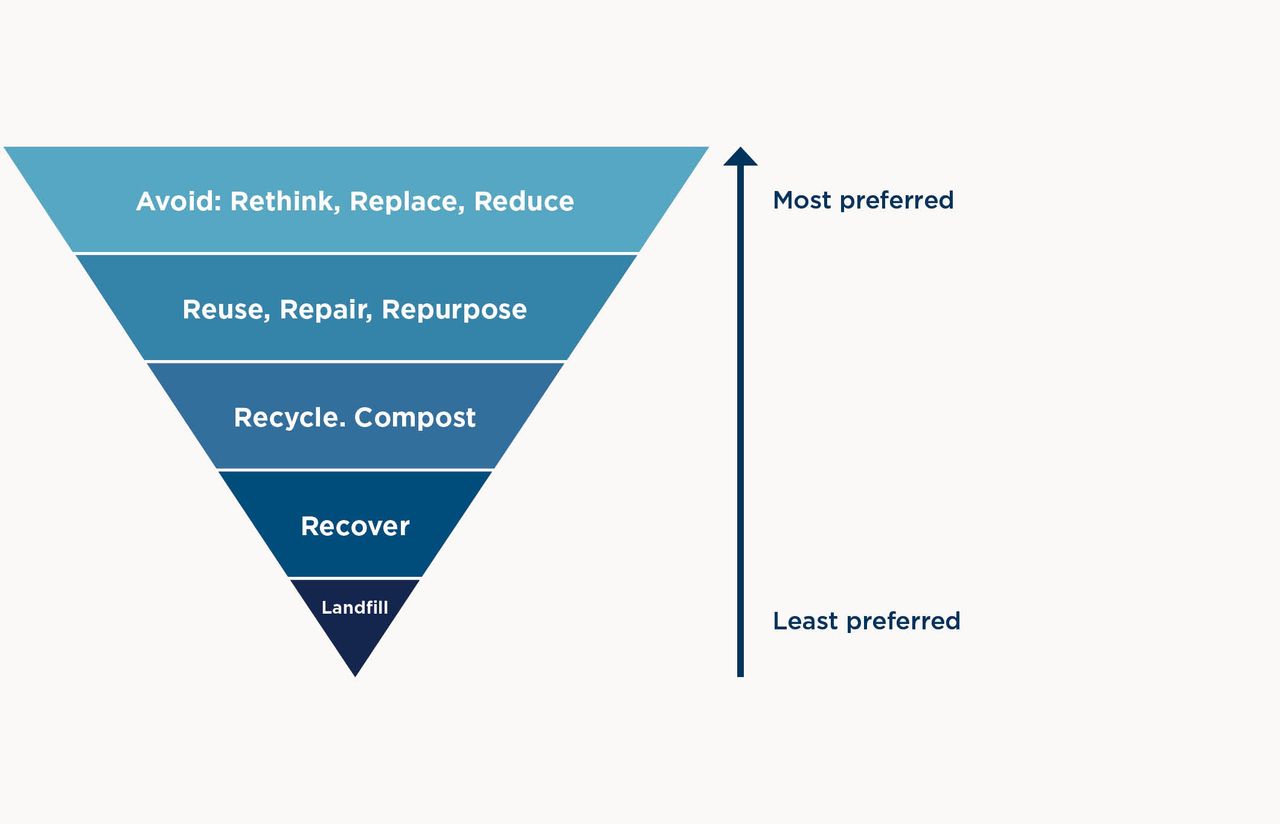
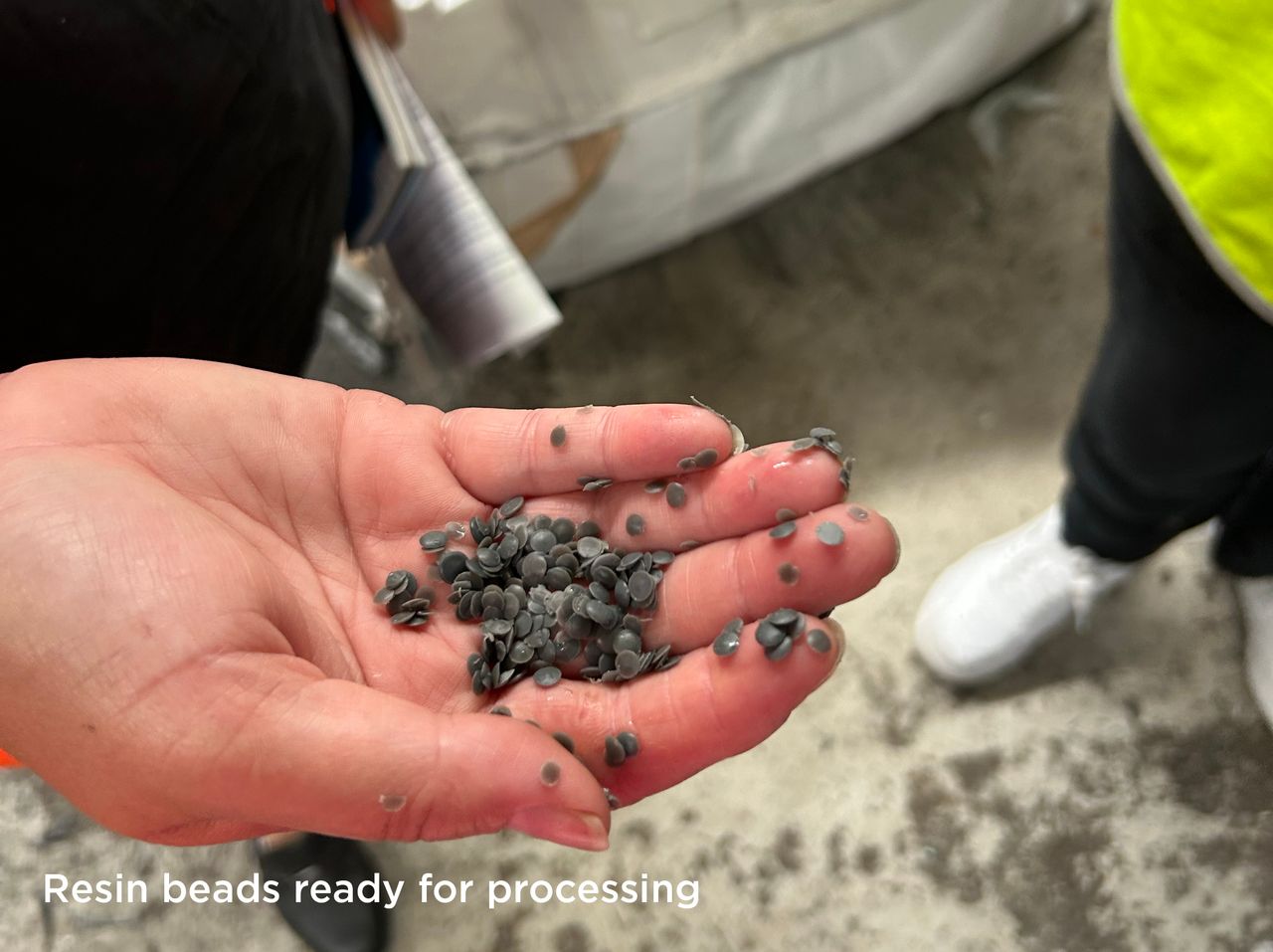
After reuse, the next preferred option for waste management is recycling. While reuse refers to the use of a material without major changes to its form, recycling requires major physical or chemical breakdown of the original item (e.g. to generate pellets or chips), which can then be used to manufacture a new product. Keep in mind that recycling can be “up-cycling”, where the value/quality of the product is similar or even increased whereas with “down-cycling”, the value/quality of the product is decreased.
When recycling, it is important that the final recycled product is of high enough quality to justify the energy required to recycle it in the first place. A low-quality product that has limited market uses may offer limited environmental benefits when weighed against processing costs (and energy usage). Recycling high-quality, single-stream materials back into the same product is the most preferred pathway. This increases the chances that it can be recycled repeatedly with minimal new material inputs.
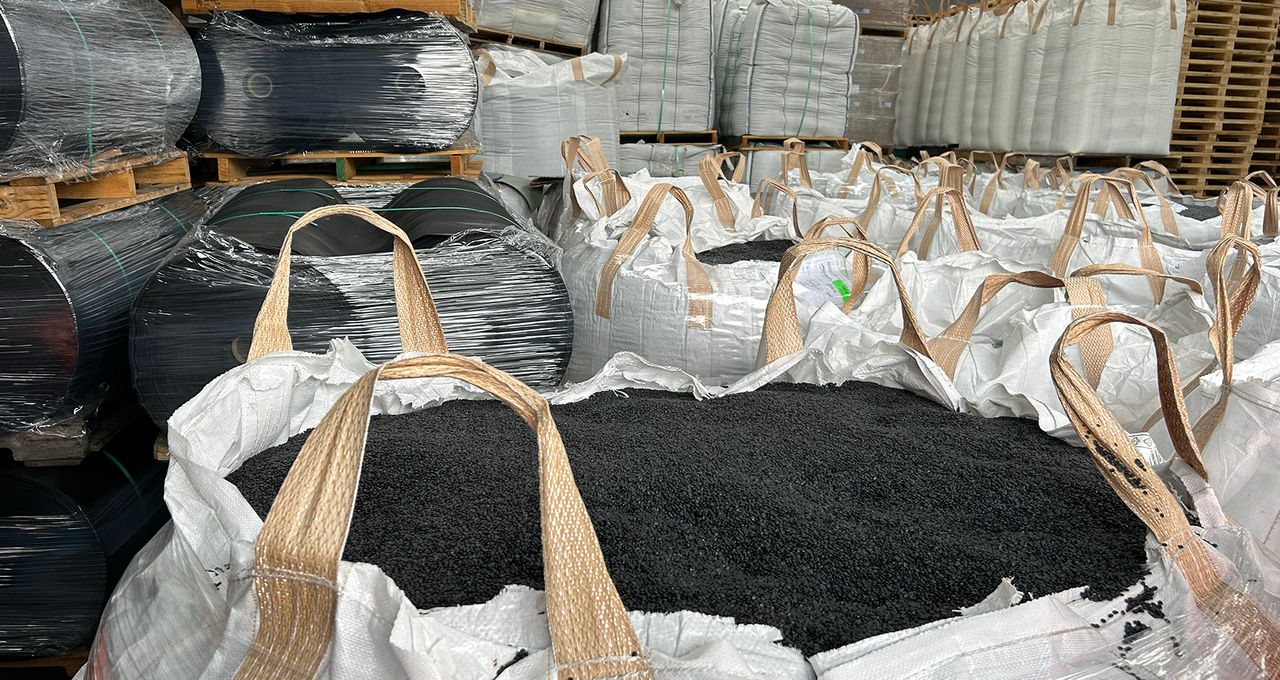
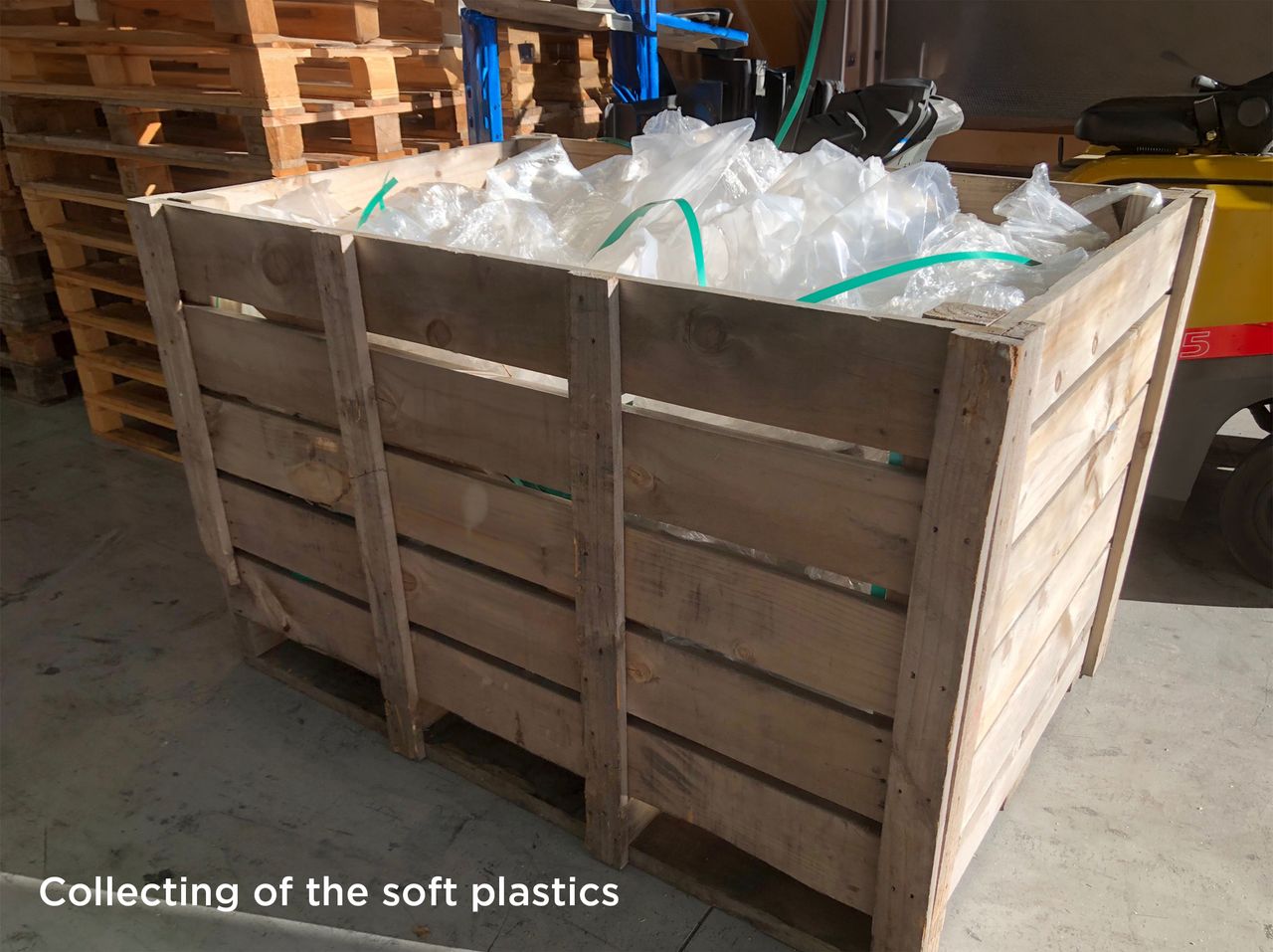
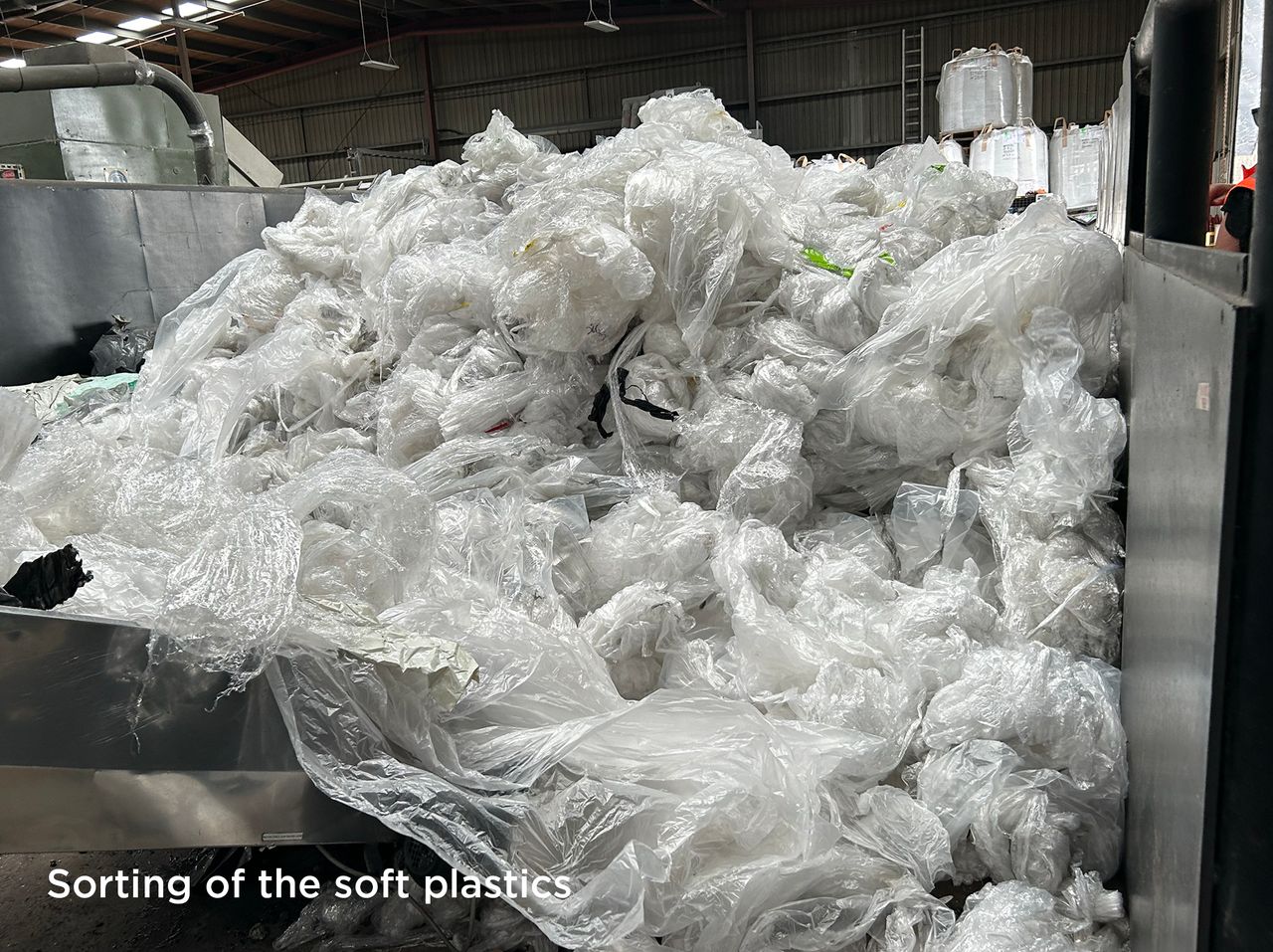
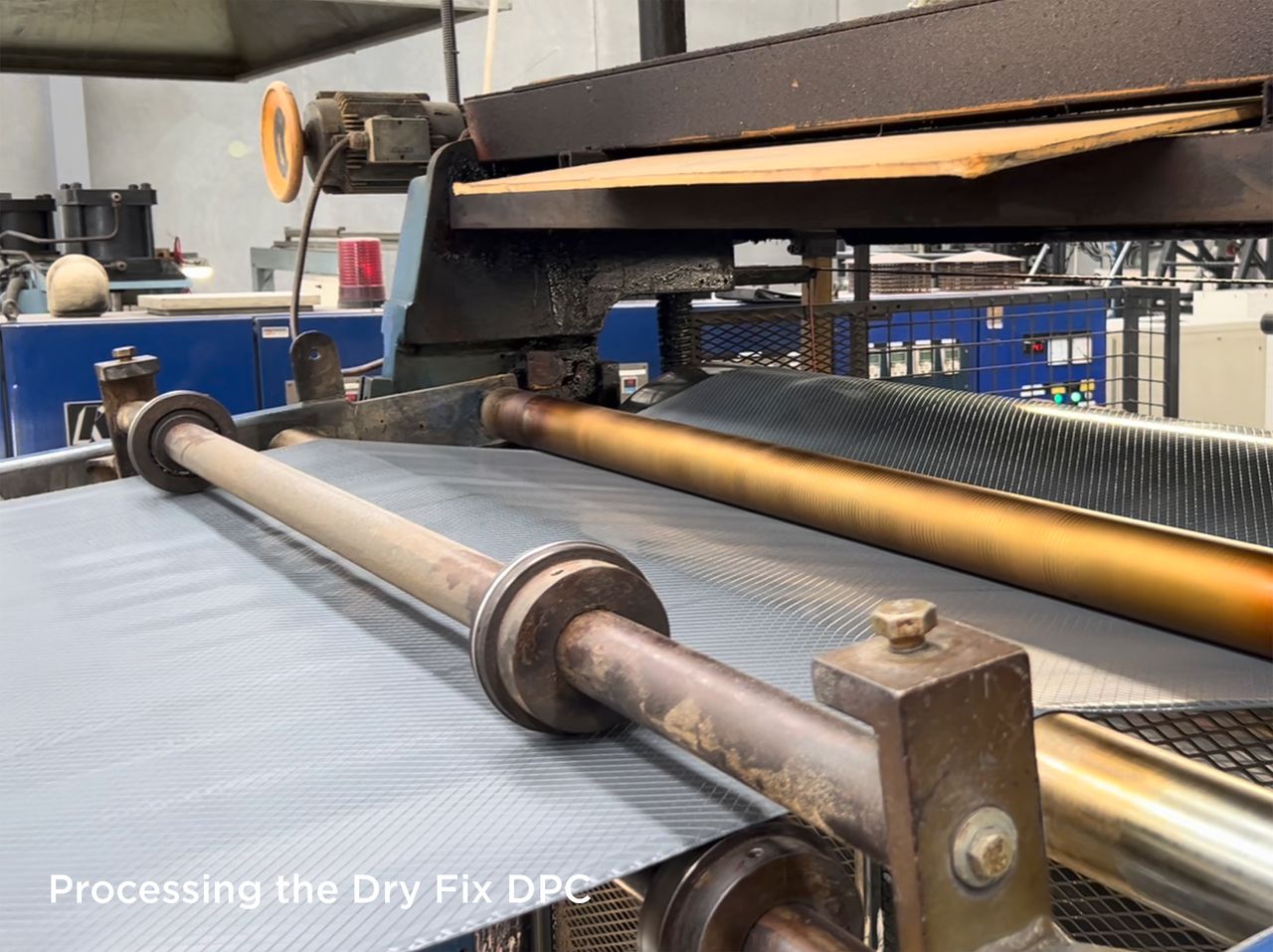
Masons Auckland branch recycles soft plastic packaging back into their own products. The soft plastic packaging, which comes with incoming shipments, is nice, clean, clear soft plastic. This is collected and sent to a local recycling company, who then turn it into Masons Dry-Fix DPC product. The benefits of this are two-fold – it prevents the soft plastics from going to landfill and taking up limited space, and produces a product made of recycled material, which in turn reduces the need for new plastic products to be made from fossil fuels. This reduces pressure on our planet’s natural resources.